Showing posts with label gardening. Show all posts

Thursday, December 8, 2011

Beautiful and Useful Ornamental Plants + Their Many Uses and Health Benefits

Some people plant for hobby - for fun, for satisfaction and for beautification. Lots of people plant for profit or for business. But most of us plant ornamental plants for the mere purpose of beautifying our gardens – our surrounding. At this present economic situation of the world, we should be wise. Let’s grow beautiful ornamental plants that provide us beauty and at the same time provide us other economic importance like medicine, foods and other household uses.

1.) Common Chicory (Cichorium intybus)


Common Chicory of Europe and North America is a beautiful ornamental plant with blue, lavender, or occasionally white flowers. Other common names include Blue Sailors, Succory and Coffeeweed.

Important uses:
  • Leaves and roots are baked, ground and used as a coffee substitute and additive
  • Leaf and flower are use as treatment for everyday ailments.
  • Use variously as a tonic and appetite stimulant
  • Use as a treatment for gallstone, gastro-enteritis and sinus problems
  • Use for cuts and bruises
  • Leaves are eaten raw as a salad
  • It is used to add color and zest to salads.
  • Leaves may be served stuffed, baked, boiled, cut and cooked in a milk sauce
  • The roots are baked, ground, and used as a coffee substitute and additive
  • It is used as a sweetener in the food industry
  • It is sometimes added to yogurts as a prebiotic.
  • Some beer brewers use roasted chicory to add flavor to their stouts.
  • Flowers used as a treatment for erectile dysfunction
  • Chicory is use as purgatives for farm animals

2.) Cornflower (Centaurea cyanus)


Cornflower is also known for a variety of common names such as Bachelor's Button, Basket Flower, Bluebottle, Boutonniere Flower and Hurtsickle. This small annual flowering plant is endemic to Europe.

Important uses:
  • Cornflower is grown as an ornamental plant in gardens.
  • It is also grown for the cutflower industry in the U.S. for use by florists.
  • It is also occasionally used as a culinary ornament.
  • Cornflowers have been used and prized historically for their blue pigment.
  • It is often used as an ingredient in some tea blends and herbal teas.
  • A decoction of cornflower is effective in treating conjunctivitis and as a wash for tired eyes.

3.) Common Hollyhock (Alcea rosea)


The Common Hollyhock is a plant that bears beautiful flowers. This ornamental plant was imported into Europe from China in the 16th century.

Important uses:
  • It is an emollient and laxative.
  • It is used to control inflammation.
  • It is also used to stop bedwetting
  • It is also used as a mouthwash in cases of bleeding gums.

4.) Meadow Garlic (Allium canadense)
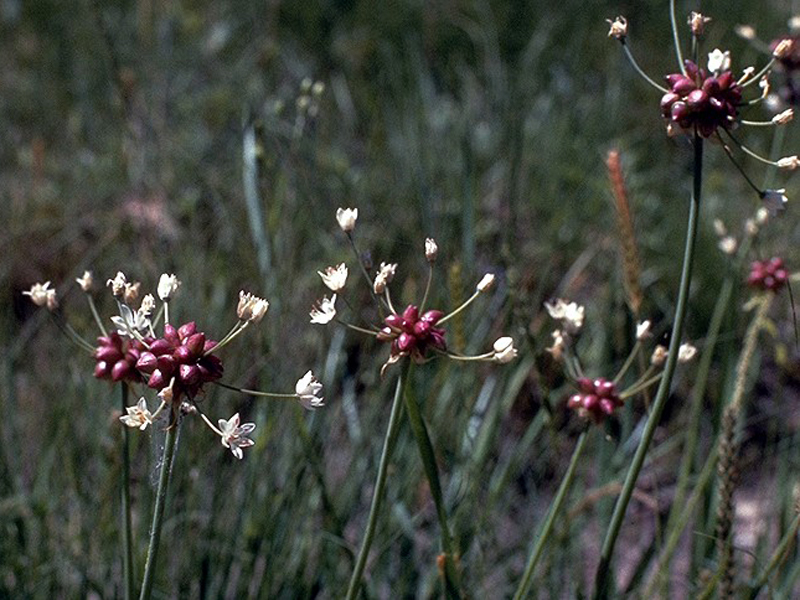

Meadow Garlic is a perennial plant endemic to North America with edible bulb and unique-looking flowers. The plant also has strong, onion-like odor. It is also known as Wild Onion, Tree Onion, Wild Garlic, and Canadian Garlic. Meadow garlic is edible.

Important uses:
  • The juice of the Meadow Garlic is used as a moth repellent
  • The whole plant is said to repel insects and moles.
  • The plant can be rubbed on exposed parts of the body to protect them from the bites of scorpions and lizards.

5.) Granny's Nightcap (Aquilegia vulgaris)


Granny’ Nightcap is a plant with beautiful flowers. It is also commonly known as European Columbine. This species is endemic to Europe and can grow up to 1.2 meters in height.

Important uses:
  • Dried crushed seeds, made into a dusting powder, will kill lice very effectively.
  • It is recommended to ease the pains of childbirth. It is used to promote perspiration to help in childbirth
  • It is used as an astringent and diuretic.
  • It had been used in the past to cure diarrhea.
  • It is also used to alleviate rheumatic pains.

Hope you enjoyed this. Thank you so much!

See also


Beautiful and Useful Ornamental Plants + Their Many Uses and Health Benefits

Some people plant for hobby - for fun, for satisfaction and for beautification. Lots of people plant for profit or for business. But most of us plant ornamental plants for the mere purpose of beautifying our gardens – our surrounding. At this present economic situation of the world, we should be wise. Let’s grow beautiful ornamental plants that provide us beauty and at the same time provide us other economic importance like medicine, foods and other household uses.

1.) Common Chicory (Cichorium intybus)


Common Chicory of Europe and North America is a beautiful ornamental plant with blue, lavender, or occasionally white flowers. Other common names include Blue Sailors, Succory and Coffeeweed.

Important uses:
  • Leaves and roots are baked, ground and used as a coffee substitute and additive
  • Leaf and flower are use as treatment for everyday ailments.
  • Use variously as a tonic and appetite stimulant
  • Use as a treatment for gallstone, gastro-enteritis and sinus problems
  • Use for cuts and bruises
  • Leaves are eaten raw as a salad
  • It is used to add color and zest to salads.
  • Leaves may be served stuffed, baked, boiled, cut and cooked in a milk sauce
  • The roots are baked, ground, and used as a coffee substitute and additive
  • It is used as a sweetener in the food industry
  • It is sometimes added to yogurts as a prebiotic.
  • Some beer brewers use roasted chicory to add flavor to their stouts.
  • Flowers used as a treatment for erectile dysfunction
  • Chicory is use as purgatives for farm animals

2.) Cornflower (Centaurea cyanus)


Cornflower is also known for a variety of common names such as Bachelor's Button, Basket Flower, Bluebottle, Boutonniere Flower and Hurtsickle. This small annual flowering plant is endemic to Europe.

Important uses:
  • Cornflower is grown as an ornamental plant in gardens.
  • It is also grown for the cutflower industry in the U.S. for use by florists.
  • It is also occasionally used as a culinary ornament.
  • Cornflowers have been used and prized historically for their blue pigment.
  • It is often used as an ingredient in some tea blends and herbal teas.
  • A decoction of cornflower is effective in treating conjunctivitis and as a wash for tired eyes.

3.) Common Hollyhock (Alcea rosea)


The Common Hollyhock is a plant that bears beautiful flowers. This ornamental plant was imported into Europe from China in the 16th century.

Important uses:
  • It is an emollient and laxative.
  • It is used to control inflammation.
  • It is also used to stop bedwetting
  • It is also used as a mouthwash in cases of bleeding gums.

4.) Meadow Garlic (Allium canadense)


Meadow Garlic is a perennial plant endemic to North America with edible bulb and unique-looking flowers. The plant also has strong, onion-like odor. It is also known as Wild Onion, Tree Onion, Wild Garlic, and Canadian Garlic. Meadow garlic is edible.

Important uses:
  • The juice of the Meadow Garlic is used as a moth repellent
  • The whole plant is said to repel insects and moles.
  • The plant can be rubbed on exposed parts of the body to protect them from the bites of scorpions and lizards.

5.) Granny's Nightcap (Aquilegia vulgaris)


Granny’ Nightcap is a plant with beautiful flowers. It is also commonly known as European Columbine. This species is endemic to Europe and can grow up to 1.2 meters in height.

Important uses:
  • Dried crushed seeds, made into a dusting powder, will kill lice very effectively.
  • It is recommended to ease the pains of childbirth. It is used to promote perspiration to help in childbirth
  • It is used as an astringent and diuretic.
  • It had been used in the past to cure diarrhea.
  • It is also used to alleviate rheumatic pains.

Hope you enjoyed this. Thank you so much!

See also



Wednesday, September 14, 2011

Amazingly Beautiful Gardens in Arid Areas of the World

All the gardens that were included on the list are located in hot and arid parts of the world. Yes, large gardens do exist in desert areas even though water supply is very limited. Here are some of the most beautiful and captivating gardens in arid areas of the planet and in other areas.

Shalimar Gardens


The Shalimar Gardens are beautiful Persian garden located in Lahore, Pakistan. It was built by the Mughal emperor Shah Jahan and was completed in 1642. The Shalimar Gardens are laid out in the form of an oblong parallelogram, surrounded by a high brick wall, which is famous for its intricate fretwork. This garden was made on the concept of Char Bagh. This UNESCO World Heritage Site measure 658 meters by 258 meters and contains 410 fountains.

Paradise Garden


The Paradise Garden on the above photo is the Garden of the Taj Mahal.  It incorporates water, pathways and a strong geometric design typical of a paradise garden.

Menara Gardens


The Menara Gardens are gardens located to the west of Marrakech, Morocco, at the gates of the well-known Atlas Mountains. These beautiful gardens were built in the 1130. Its pavilion and artificial lake are surrounded by orchards and olive groves. The lake is supplied with water through an old hydraulic system which conveys water from the mountains located 30 km approximately away from Marrakech.

Majorelle Garden


The Majorelle Garden is a captivating botanical garden located also in Marrakech, Morocco. This garden has been open to the public since 1947. The garden also houses the Islamic Art Museum of Marrakech, whose collection includes North African textiles from Saint-Laurent's (former owner of the garden) personal collection as well as ceramics, jewelry, and paintings by Majorelle – the designer of the garden to whom it was named. The garden hosts more than 15 bird species, which can be found only in the area of North Africa.

Agdal Gardens


The Agdal Gardens are gardens, of about 400 hectares or 4.0 km2 located in Morocco. The gardens contain groves of apricot, fig, lemon, orange and pomegranate trees in rectangular plots, linked by olive-lined walkways. The name f this UNESCO World Heritage Site means “walled meadow”.

Al- Azhar Park


Al-Azhar Park is a public park located in Cairo, the capital of Egypt. This amazing park in the midst of a barren area is listed as one of the world’s sixty great public spaces by the Project for Public Spaces or PPS. It was opened to the public in 2005. The gardens of Al-Azhar are reminiscent of historical Islamic gardens, with a blend of modern and traditional elements. The central terraced formal gardens, emphatic use of fountains, Mamluk multicolored stonework, sunken gardens, intersecting waterways and bold Islamic geometry are all integrated into a contemporary site design; cafes are situated at the entrance, playgrounds and scenic overlooks are arranged along curving paths. The site is supported by a reservoir constructed for the project.

Char Bagh Garden


Char Bagh or Four Gardens is a Persian-style garden with quadrilateral layout and was the first of its kind in the South Asia region in such a scale. This beautiful garden is part of Humayun’s Tomb in India.

See also


Amazingly Beautiful Gardens in Arid Areas of the World

All the gardens that were included on the list are located in hot and arid parts of the world. Yes, large gardens do exist in desert areas even though water supply is very limited. Here are some of the most beautiful and captivating gardens in arid areas of the planet and in other areas.

Shalimar Gardens


The Shalimar Gardens are beautiful Persian garden located in Lahore, Pakistan. It was built by the Mughal emperor Shah Jahan and was completed in 1642. The Shalimar Gardens are laid out in the form of an oblong parallelogram, surrounded by a high brick wall, which is famous for its intricate fretwork. This garden was made on the concept of Char Bagh. This UNESCO World Heritage Site measure 658 meters by 258 meters and contains 410 fountains.

Paradise Garden


The Paradise Garden on the above photo is the Garden of the Taj Mahal.  It incorporates water, pathways and a strong geometric design typical of a paradise garden.

Menara Gardens


The Menara Gardens are gardens located to the west of Marrakech, Morocco, at the gates of the well-known Atlas Mountains. These beautiful gardens were built in the 1130. Its pavilion and artificial lake are surrounded by orchards and olive groves. The lake is supplied with water through an old hydraulic system which conveys water from the mountains located 30 km approximately away from Marrakech.

Majorelle Garden


The Majorelle Garden is a captivating botanical garden located also in Marrakech, Morocco. This garden has been open to the public since 1947. The garden also houses the Islamic Art Museum of Marrakech, whose collection includes North African textiles from Saint-Laurent's (former owner of the garden) personal collection as well as ceramics, jewelry, and paintings by Majorelle – the designer of the garden to whom it was named. The garden hosts more than 15 bird species, which can be found only in the area of North Africa.

Agdal Gardens


The Agdal Gardens are gardens, of about 400 hectares or 4.0 km2 located in Morocco. The gardens contain groves of apricot, fig, lemon, orange and pomegranate trees in rectangular plots, linked by olive-lined walkways. The name f this UNESCO World Heritage Site means “walled meadow”.

Al- Azhar Park


Al-Azhar Park is a public park located in Cairo, the capital of Egypt. This amazing park in the midst of a barren area is listed as one of the world’s sixty great public spaces by the Project for Public Spaces or PPS. It was opened to the public in 2005. The gardens of Al-Azhar are reminiscent of historical Islamic gardens, with a blend of modern and traditional elements. The central terraced formal gardens, emphatic use of fountains, Mamluk multicolored stonework, sunken gardens, intersecting waterways and bold Islamic geometry are all integrated into a contemporary site design; cafes are situated at the entrance, playgrounds and scenic overlooks are arranged along curving paths. The site is supported by a reservoir constructed for the project.

Char Bagh Garden


Char Bagh or Four Gardens is a Persian-style garden with quadrilateral layout and was the first of its kind in the South Asia region in such a scale. This beautiful garden is part of Humayun’s Tomb in India.

See also


Wednesday, August 31, 2011

Unique Plants With Large and Beautiful Flowers


Some plants are unique in appearance. They also bear unique flowers. Here are some unique plant species with equally unique flowers.

Frithia pulchra


Frithia pulchra is a peculiar looking plant species that bears a beautiful purple flower. This leafless plan is native to South Africa and its natural habitat is temperate grassland.

Huernia plowesii


Huernia plowesii is a leafless species of plant that bear large and beautifully spotted flowers. It is native to Namibia and its natural habitat is rocky areas.

Parachute Plant


One plant that bears one of the most unusual flowers is the Parachute Plant or Ceropegia sandersonii. This plant is native to Mozambique, South Africa and Swaziland. It is also known as Fountain Flower and Umbrella Plant.  The flower of Parachute Plants serve as a biological myiophilous pitfall-trap, that traps flies when they descent into the corolla tube. Small hairs that are pointed downwards prevent the insect from escaping. Once trapped, the victim is thoroughly pollinated and only released when the flower is left off and the hairs weaken.

Hoya serpens


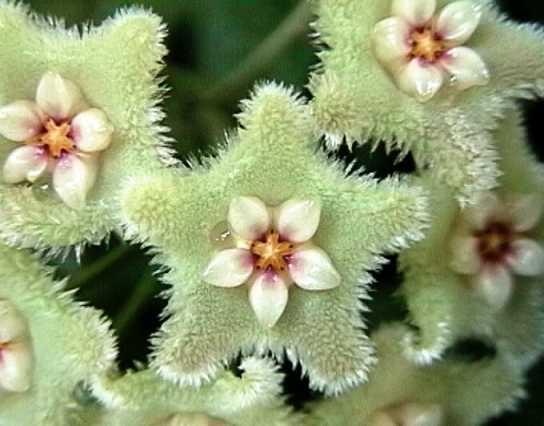
Hoya serpens is a small trailing vine found in the Himalayas and surrounding areas. The leaves of this unique plant are dark green and hairy and the flowers produced are extremely fuzzy with a light green corolla and a white corona. In addition, the flowers produce a sweet fragrance.

Hoya cinnamomfolia


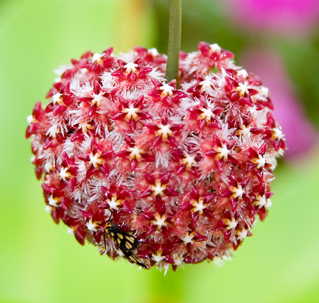
Hoya cinnamomifolia is a unique plant that bears unique flower. This vine that comes from the island of Java is one of the larger members of the Hoya genus with typically one leaf per node. The flowers produced come in umbels of up to 30 and have a lime green corolla and bright burgundy corona.

Lantern Flower


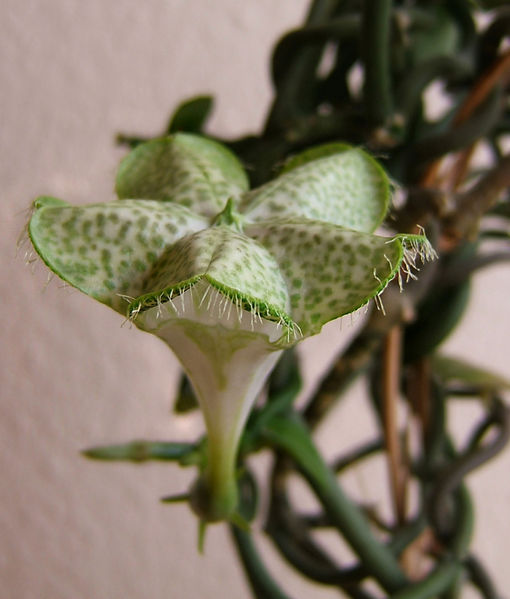
Lantern Flower or Ceropegia distinctia has flowers that look like a fountain of wax. This unusual plant is grown as ornamental houseplant and can be propagated by seed and cuttings. It is known also for various common names like Parasol Flower, Parachute Flower, Bushman’s Pipe, String of Hearts, Snake Creeper, Wine-glass Vine, Rosary Vine, and Necklace Vine.

Hoya mindorensis


Hoya mindorensis, is another unique plant with a distinctively colorful and uniquely-shaped flower. This beautiful plant is native to the Philippines, specifically in the island province of Mindoro.

Paintbrush Lily


Paintbrush, which is scientifically named Scadoxus puniceus, is a unique plant species from South Africa. It can also be found in Ethiopia and Tanzania. This plant preferred habitat is in cool, moist leaf litter and thus is found in shady places, such as ravines and forests.

Echinopsis oxygona


The Echinopsis oxygona reminds me of the oldest type of musical instrument. This unique plant that bears large trumpet-like flower is native to Argentina, Brazil and Uruguay. Its features include: many robust spines, spherical shape, and a large flower, with sharply pointed lavender petals, and a fine faint scent.

Cardoncillo


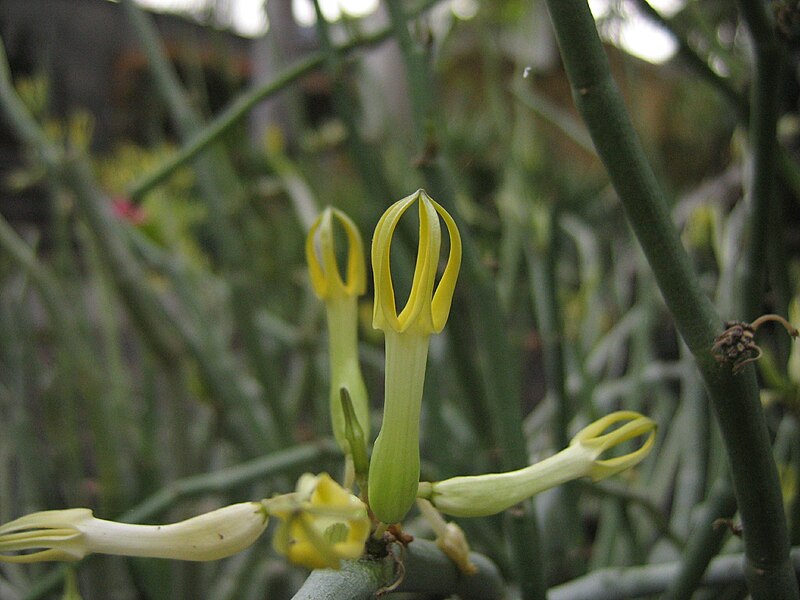
Cardoncillo or Ceropegia dichotoma is a flowering plant native to the Canary Islands. It bears uniquely-shaped flowers.

See also