Showing posts with label astronomy. Show all posts

Wednesday, November 16, 2011

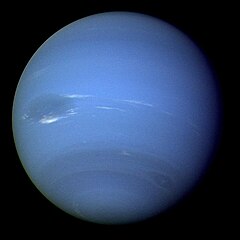
60 Interesting And Scientific Facts About Neptune

Neptune is one of the largest planets in the Solar System. Here’s a list of the most interesting and scientific facts about planet Neptune.

1.) Planet Neptune is named after the Roman god of the sea – Neptune, the equivalent of Greek’s Poseidon.

2.) Neptune is the 8th planet in distance from the Sun.

3.) It is the 4th largest planet in diameter and the 3rd largest in mass in the solar system.

4.) Neptune was the second major planet, after Uranus, to be detected using a telescope.

5.) The largest storm, known as the Great Dark Spot, appeared in the planet’s southern hemisphere and was photographed extensively in 1989 by the Voyager 2 spacecraft.


6.) Neptune has the fastest winds in the solar system, reaching speeds of 2,000 km/h.

7.) Neptune’s core, which reaches temperatures of 5149°C, is hotter than the Sun’s surface.

8.) Proteus is the sixth moon out from Neptune. This satellite is the largest irregularly shaped moon in the solar system.

9.) Neptune is classified as one of the giant or Jovian (Jupiter-like) planets together with Jupiter, Saturn, and Uranus.

10.) Neptune and Uranus are also classified as ice giant planet because they are mainly made of the ice-forming molecules water, ammonia, and methane as a liquid mixture above what is thought to be a rocky core.

11.) The planet’s atmosphere is mainly hydrogen and helium, along with methane gas that gives the planet a blue-green color.

12.) Neptune orbits the Sun at an average distance of about 4,490 million km in a period of 165 Earth years and only receives about 1/900th the amount of sunlight that Earth does.

13.) Neptune’s diameter at the equator is about 49,520 km.

14.) Even though Neptune’s volume is 72 times Earth’s volume, its mass is only 17.15 times Earth’s mass.

15.) Neptune has four rings and one of the planets with the most satellite. It has 13 known moons.


16.) German astronomer Johann Gottfried Galle first observed the planet by telescope in 1846.

17.) Leverrier proposed that this planet be named after the sea god Neptune and the appropriateness of this name is confirmed in the 20th century when astronomers learned about the watery interior of Neptune.

18.) Neptune is barely visible to the naked eye and is so faint that even through binoculars it appears as a dim star.

19.) Through a large telescope, the planet appears from Earth as a small greenish disk with a diameter of about 2.3 arc seconds.

20.) Neptune is about 4.49 billion km away from Earth. So far that only one spacecraft has visited the planet.

21.) During a rare alignment of the four giant planets, the spacecraft Voyager 2, launched on August 20, 1977, was able to pass by Jupiter (in 1979), Saturn (in 1981), Uranus (in 1986), and Neptune (in 1989).

22.) Voyager 2 successively passed each of the four giant planets and reached Neptune more than ten years after its launch.

23.) As Voyager 2 passed by Neptune, it recorded and transmitted images of the planet, its rings, and its moons.

24.) Neptune orbits about 4,490 million km Neptune takes 164.79 years to complete a single revolution around the Sun, so a year on Neptune is 164.79 times longer than a year on Earth.

25.) The orbital plane of Neptune lies close to Earth’s orbital plane. As a result, Neptune always crosses the same region of Earth’s sky.


As compared to Earth

26.) The planet spins around its axis once every 16 hours in a counterclockwise direction, just as Earth spins once every 24 hours.

27.) The axis of rotation on Neptune tilts 29.6° into its orbital plane. This tilt gives Neptune almost Earth-like seasons.

28.) Neptune contains mostly rock and water, with hydrogen and helium and trace amounts of methane in its dense atmosphere.

29.) Astronomers believe that Neptune formed from frozen water and rock supplied by icy comet-like material found in the outer regions of the solar system.

30.) Although Neptune is one of the giant planets, it is smaller and has a different chemical composition than those of Saturn and Jupiter.

31.) Neptune is made mostly of water. Because water is denser than hydrogen or helium, Neptune is more compact than either Jupiter or Saturn.

32.) Neptune has a radius of about 24,760 km and is also more massive and compact than Uranus, which has a radius of 25,560 km.

33.) Neptune’s ocean is extremely hot reaching temperature of about 4700° C. The ocean remains liquid at this temperature instead of evaporating because the pressure deep in Neptune is several million times higher than the atmospheric pressure on Earth.

34.) The gaseous atmosphere of Neptune contains hydrogen, helium, and about 3 percent methane.

35.) Light reflected from Neptune’s deep atmosphere is blue, because the atmospheric methane absorbs red and orange light but scatters blue light.


36.) Neptune emits about 2.7 times the amount of heat it absorbs from the Sun.

37.) Neptune has an active atmosphere, with winds and massive storms that may be caused by heat escaping the planet’s interior.

38.) Neptune’s winds, which blow in a latitude direction, are faster in the planet’s polar regions than they are at Neptune’s equator.

39.) Storms thousands of kilometers across in Neptune’s atmosphere had been observed.

40.) Scientists estimated that the Great Dark Spot was as large in diameter as Earth is.

41.) Neptune, like Earth, is surrounded by a magnetic field and the influence of Neptune’s magnetic field extends for several hundred thousand kilometers above the planet.

42.) These rings of Neptune range in width from 15 km to 5,800 km. All of these rings completely encircle the planet.

43.) The outermost ring includes three or more arcs of concentrated debris some of which had been detected from Earth before the Voyager 2 encounter.

44.) Only two of the 13 moons—Triton and Nereid—were directly observed from Earth prior to the 1990s.

45.) Triton was discovered in 1846 by British astronomer William Lassell


46.) Nereid was discovered in 1949 by Dutch-born American astronomer Gerard Kuiper.

47.) Scientists discovered another moon, Larissa, in 1981 when the moon occulted a star.

48.) Five more moons of Neptune were discovered from images transmitted to Earth by the Voyager 2 spacecraft.

49.) Large Earth-based telescopes led to the discovery of 3 more moons in 2003 and 2 more in 2004, bringing the total to 13.

50.) From the closest to Neptune outward, these moons are Naiad, Thalassa, Despina, and Galatea.

51.) Larissa is the fifth moon in distance from Neptune. It is heavily cratered and irregular in shape.

52.) Proteus is the sixth moon out from Neptune. This satellite is the largest irregularly shaped moon in the solar system with a diameter of 436 km through its widest diameter and 402 km through its narrowest diameter.

53.) Triton is the seventh moon from Neptune and is the largest of the planet’s moons, measuring 2,700 km in diameter, larger than the dwarf planet Pluto.

54.) Triton is consists of about one-quarter ice and three-quarters rock and has few craters on its surface.

55.) Triton has undergone recent geological changes and has a thin nitrogen atmosphere and a polar cap.


56.) Voyager 2 recorded geyser-like plumes erupting from the icy crust of triton
.
57.) Triton is peculiar among the largest moon in the solar system; it has a retrograde (clockwise) orbit, meaning that it revolves around Neptune in the opposite direction that the planet rotates (counterclockwise).

58.)  Its circular orbit is also tilted out of the plane of Neptune's equator by 157°. Triton’s odd orbit is a puzzle.

59.) Nereid is the eighth moon from Neptune and has an extremely elliptical orbit, varying in distance around Neptune from 1.4 million km.

60.) Neptune’s moons are Naiad, Thalassa, Despina, Galatea, Larissa, Proteus, Triton, Nereid and 5 unnamed moons.

See also

60 Interesting And Scientific Facts About Neptune

Neptune is one of the largest planets in the Solar System. Here’s a list of the most interesting and scientific facts about planet Neptune.

1.) Planet Neptune is named after the Roman god of the sea – Neptune, the equivalent of Greek’s Poseidon.

2.) Neptune is the 8th planet in distance from the Sun.

3.) It is the 4th largest planet in diameter and the 3rd largest in mass in the solar system.

4.) Neptune was the second major planet, after Uranus, to be detected using a telescope.

5.) The largest storm, known as the Great Dark Spot, appeared in the planet’s southern hemisphere and was photographed extensively in 1989 by the Voyager 2 spacecraft.


6.) Neptune has the fastest winds in the solar system, reaching speeds of 2,000 km/h.

7.) Neptune’s core, which reaches temperatures of 5149°C, is hotter than the Sun’s surface.

8.) Proteus is the sixth moon out from Neptune. This satellite is the largest irregularly shaped moon in the solar system.

9.) Neptune is classified as one of the giant or Jovian (Jupiter-like) planets together with Jupiter, Saturn, and Uranus.

10.) Neptune and Uranus are also classified as ice giant planet because they are mainly made of the ice-forming molecules water, ammonia, and methane as a liquid mixture above what is thought to be a rocky core.

11.) The planet’s atmosphere is mainly hydrogen and helium, along with methane gas that gives the planet a blue-green color.

12.) Neptune orbits the Sun at an average distance of about 4,490 million km in a period of 165 Earth years and only receives about 1/900th the amount of sunlight that Earth does.

13.) Neptune’s diameter at the equator is about 49,520 km.

14.) Even though Neptune’s volume is 72 times Earth’s volume, its mass is only 17.15 times Earth’s mass.

15.) Neptune has four rings and one of the planets with the most satellite. It has 13 known moons.


16.) German astronomer Johann Gottfried Galle first observed the planet by telescope in 1846.

17.) Leverrier proposed that this planet be named after the sea god Neptune and the appropriateness of this name is confirmed in the 20th century when astronomers learned about the watery interior of Neptune.

18.) Neptune is barely visible to the naked eye and is so faint that even through binoculars it appears as a dim star.

19.) Through a large telescope, the planet appears from Earth as a small greenish disk with a diameter of about 2.3 arc seconds.

20.) Neptune is about 4.49 billion km away from Earth. So far that only one spacecraft has visited the planet.

21.) During a rare alignment of the four giant planets, the spacecraft Voyager 2, launched on August 20, 1977, was able to pass by Jupiter (in 1979), Saturn (in 1981), Uranus (in 1986), and Neptune (in 1989).

22.) Voyager 2 successively passed each of the four giant planets and reached Neptune more than ten years after its launch.

23.) As Voyager 2 passed by Neptune, it recorded and transmitted images of the planet, its rings, and its moons.

24.) Neptune orbits about 4,490 million km Neptune takes 164.79 years to complete a single revolution around the Sun, so a year on Neptune is 164.79 times longer than a year on Earth.

25.) The orbital plane of Neptune lies close to Earth’s orbital plane. As a result, Neptune always crosses the same region of Earth’s sky.


As compared to Earth

26.) The planet spins around its axis once every 16 hours in a counterclockwise direction, just as Earth spins once every 24 hours.

27.) The axis of rotation on Neptune tilts 29.6° into its orbital plane. This tilt gives Neptune almost Earth-like seasons.

28.) Neptune contains mostly rock and water, with hydrogen and helium and trace amounts of methane in its dense atmosphere.

29.) Astronomers believe that Neptune formed from frozen water and rock supplied by icy comet-like material found in the outer regions of the solar system.

30.) Although Neptune is one of the giant planets, it is smaller and has a different chemical composition than those of Saturn and Jupiter.

31.) Neptune is made mostly of water. Because water is denser than hydrogen or helium, Neptune is more compact than either Jupiter or Saturn.

32.) Neptune has a radius of about 24,760 km and is also more massive and compact than Uranus, which has a radius of 25,560 km.

33.) Neptune’s ocean is extremely hot reaching temperature of about 4700° C. The ocean remains liquid at this temperature instead of evaporating because the pressure deep in Neptune is several million times higher than the atmospheric pressure on Earth.

34.) The gaseous atmosphere of Neptune contains hydrogen, helium, and about 3 percent methane.

35.) Light reflected from Neptune’s deep atmosphere is blue, because the atmospheric methane absorbs red and orange light but scatters blue light.


36.) Neptune emits about 2.7 times the amount of heat it absorbs from the Sun.

37.) Neptune has an active atmosphere, with winds and massive storms that may be caused by heat escaping the planet’s interior.

38.) Neptune’s winds, which blow in a latitude direction, are faster in the planet’s polar regions than they are at Neptune’s equator.

39.) Storms thousands of kilometers across in Neptune’s atmosphere had been observed.

40.) Scientists estimated that the Great Dark Spot was as large in diameter as Earth is.

41.) Neptune, like Earth, is surrounded by a magnetic field and the influence of Neptune’s magnetic field extends for several hundred thousand kilometers above the planet.

42.) These rings of Neptune range in width from 15 km to 5,800 km. All of these rings completely encircle the planet.

43.) The outermost ring includes three or more arcs of concentrated debris some of which had been detected from Earth before the Voyager 2 encounter.

44.) Only two of the 13 moons—Triton and Nereid—were directly observed from Earth prior to the 1990s.

45.) Triton was discovered in 1846 by British astronomer William Lassell


46.) Nereid was discovered in 1949 by Dutch-born American astronomer Gerard Kuiper.

47.) Scientists discovered another moon, Larissa, in 1981 when the moon occulted a star.

48.) Five more moons of Neptune were discovered from images transmitted to Earth by the Voyager 2 spacecraft.

49.) Large Earth-based telescopes led to the discovery of 3 more moons in 2003 and 2 more in 2004, bringing the total to 13.

50.) From the closest to Neptune outward, these moons are Naiad, Thalassa, Despina, and Galatea.

51.) Larissa is the fifth moon in distance from Neptune. It is heavily cratered and irregular in shape.

52.) Proteus is the sixth moon out from Neptune. This satellite is the largest irregularly shaped moon in the solar system with a diameter of 436 km through its widest diameter and 402 km through its narrowest diameter.

53.) Triton is the seventh moon from Neptune and is the largest of the planet’s moons, measuring 2,700 km in diameter, larger than the dwarf planet Pluto.

54.) Triton is consists of about one-quarter ice and three-quarters rock and has few craters on its surface.

55.) Triton has undergone recent geological changes and has a thin nitrogen atmosphere and a polar cap.


56.) Voyager 2 recorded geyser-like plumes erupting from the icy crust of triton
.
57.) Triton is peculiar among the largest moon in the solar system; it has a retrograde (clockwise) orbit, meaning that it revolves around Neptune in the opposite direction that the planet rotates (counterclockwise).

58.)  Its circular orbit is also tilted out of the plane of Neptune's equator by 157°. Triton’s odd orbit is a puzzle.

59.) Nereid is the eighth moon from Neptune and has an extremely elliptical orbit, varying in distance around Neptune from 1.4 million km.

60.) Neptune’s moons are Naiad, Thalassa, Despina, Galatea, Larissa, Proteus, Triton, Nereid and 5 unnamed moons.

See also

Thursday, November 3, 2011

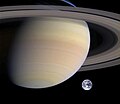
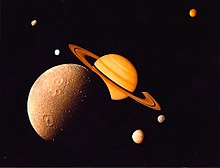
Interesting Scientific Facts About the Planet Saturn

One of the largest planets in our Solar System is Saturn. Here’s a list of amazingly important and interesting facts about this planet.

1.) This planet is named after Saturn, the Roman god of agriculture, the equivalent of the Greek’s Cronus.

2.) Saturn is the 2nd largest planet in the Solar System after Jupiter.

3.) It is the 6th planet in order of distance from the Sun.

4.) The planet’s most distinctive feature is a giant system of rings that surrounds the planet at its equator, stretching over twice the width of the planet itself.

5.) 1n 1610, the first person to see the rings was the Italian scientist Galileo with the used of his telescope.


6.)  Saturn when viewed from Earth appears as a yellowish object and is one of the brightest in the night sky.

7.) Saturn takes about 29.5 years to orbit the Sun at an average distance of 1,435 billion km.

8.) Saturn rotates on its axis in about 10.5 hours and is tilted at about 27°, giving the planet distinct seasons.

9.) The diameter of Saturn is about 121,000 km (75,000 mi), and its mass is equal to the mass of about 95 Earths, making it the second largest planet in our solar system after Jupiter.

10.) Saturn is 10 percent wider at its equator than at its poles and has a more oblate (flattened sphere) shape than any other planet.

11.) The National Aeronautics and Space Administration (NASA) launched the orbiter Cassini spacecraft toward Saturn in October 1997 and reached Saturn in July 2004.

12.) Cassini had detected carbon molecules and geysers on Saturn’s moon Enceladus

13.) Saturn is the least dense of the solar system’s planets. The mean density of Saturn is eight times less than that of Earth because the planet consists mainly of the lightweight gas hydrogen.

14.) Saturn to radiate into space three times as much heat as it receives from the Sun.

15.) Saturn receives about 1.1 percent as much sunlight as Earth does.


As compared to the Earth

16.) Saturn's atmospheric constituents are, in order by mass, hydrogen (88 percent) and helium (11 percent); and traces of methane, ammonia, ammonia crystals, and such other gases as ethane, acetylene, and phosphine comprise the remainder.

17.) The temperatures of Saturn's cloud tops are close to –176°C, about 27 degrees Celsius lower than such locations on Jupiter.

18.) Saturn’s rings are named in order of their discovery, and from the planet outward they are known as the D, C, B, A, F, G, and E rings.

19.) The Cassini probe discovered an additional faint ring between the G ring and the F ring in 2006.

20.) The main rings are now known to comprise more than 100,000 individual ringlets, each of which circles the planet.

21.) The visible rings stretch out to a distance of 136,200 km from Saturn's center, but in many regions they may be only 5 m (16.4 ft) thick.

22.) They are thought to consist of aggregates of rock, frozen gases, and water ice ranging in size from less than 0.0005 cm in diameter to about 10 m in diameter—from dust to boulder size.

23.) The apparent separation between the A and B rings is called Cassini's division, after its discoverer, the French astronomer Giovanni Cassini.

24.) Saturn has at least 62 moons that range up to 2,575 km in radius and consist mostly of the lighter, icy substances. Only 53 have formal names. There are also hundreds of moonlets on the planet’s rings.

25.) Twelve moons of Saturn were discovered in 2005, 9 moons were discovered in 2006 and 4 moons were discovered in 2007.


26.) The five larger inner satellites of Saturn are Mimas, Enceladus, Tethys, Dione, and Rhea. These moons are roughly spherical in shape and composed mostly of water ice and are heavily cratered by meteorite impacts.

27.) The outer satellites of Saturn are Hyperion and Iapetus. These satellites also consist mainly of water ice.

28.) Phoebe, the farthest large satellite, moves in a retrograde orbit (in the opposite direction of the orbits of most of the other satellites) that is at a sharp angle to Saturn's equator.

29.) Saturn’s largest moon is the Titan. It orbits the planet between the inner and outer satellites and has a radius of 2,575 km.

30.) Titan is larger than the planet Mercury and features large rock-like objects probably made of ice.

See also
Enhanced by Zemanta

Interesting Scientific Facts About the Planet Saturn

One of the largest planets in our Solar System is Saturn. Here’s a list of amazingly important and interesting facts about this planet.

1.) This planet is named after Saturn, the Roman god of agriculture, the equivalent of the Greek’s Cronus.

2.) Saturn is the 2nd largest planet in the Solar System after Jupiter.

3.) It is the 6th planet in order of distance from the Sun.

4.) The planet’s most distinctive feature is a giant system of rings that surrounds the planet at its equator, stretching over twice the width of the planet itself.

5.) 1n 1610, the first person to see the rings was the Italian scientist Galileo with the used of his telescope.


6.)  Saturn when viewed from Earth appears as a yellowish object and is one of the brightest in the night sky.

7.) Saturn takes about 29.5 years to orbit the Sun at an average distance of 1,435 billion km.

8.) Saturn rotates on its axis in about 10.5 hours and is tilted at about 27°, giving the planet distinct seasons.

9.) The diameter of Saturn is about 121,000 km (75,000 mi), and its mass is equal to the mass of about 95 Earths, making it the second largest planet in our solar system after Jupiter.

10.) Saturn is 10 percent wider at its equator than at its poles and has a more oblate (flattened sphere) shape than any other planet.

11.) The National Aeronautics and Space Administration (NASA) launched the orbiter Cassini spacecraft toward Saturn in October 1997 and reached Saturn in July 2004.

12.) Cassini had detected carbon molecules and geysers on Saturn’s moon Enceladus

13.) Saturn is the least dense of the solar system’s planets. The mean density of Saturn is eight times less than that of Earth because the planet consists mainly of the lightweight gas hydrogen.

14.) Saturn to radiate into space three times as much heat as it receives from the Sun.

15.) Saturn receives about 1.1 percent as much sunlight as Earth does.


As compared to the Earth

16.) Saturn's atmospheric constituents are, in order by mass, hydrogen (88 percent) and helium (11 percent); and traces of methane, ammonia, ammonia crystals, and such other gases as ethane, acetylene, and phosphine comprise the remainder.

17.) The temperatures of Saturn's cloud tops are close to –176°C, about 27 degrees Celsius lower than such locations on Jupiter.

18.) Saturn’s rings are named in order of their discovery, and from the planet outward they are known as the D, C, B, A, F, G, and E rings.

19.) The Cassini probe discovered an additional faint ring between the G ring and the F ring in 2006.

20.) The main rings are now known to comprise more than 100,000 individual ringlets, each of which circles the planet.

21.) The visible rings stretch out to a distance of 136,200 km from Saturn's center, but in many regions they may be only 5 m (16.4 ft) thick.

22.) They are thought to consist of aggregates of rock, frozen gases, and water ice ranging in size from less than 0.0005 cm in diameter to about 10 m in diameter—from dust to boulder size.

23.) The apparent separation between the A and B rings is called Cassini's division, after its discoverer, the French astronomer Giovanni Cassini.

24.) Saturn has at least 62 moons that range up to 2,575 km in radius and consist mostly of the lighter, icy substances. Only 53 have formal names. There are also hundreds of moonlets on the planet’s rings.

25.) Twelve moons of Saturn were discovered in 2005, 9 moons were discovered in 2006 and 4 moons were discovered in 2007.


26.) The five larger inner satellites of Saturn are Mimas, Enceladus, Tethys, Dione, and Rhea. These moons are roughly spherical in shape and composed mostly of water ice and are heavily cratered by meteorite impacts.

27.) The outer satellites of Saturn are Hyperion and Iapetus. These satellites also consist mainly of water ice.

28.) Phoebe, the farthest large satellite, moves in a retrograde orbit (in the opposite direction of the orbits of most of the other satellites) that is at a sharp angle to Saturn's equator.

29.) Saturn’s largest moon is the Titan. It orbits the planet between the inner and outer satellites and has a radius of 2,575 km.

30.) Titan is larger than the planet Mercury and features large rock-like objects probably made of ice.

See also
Enhanced by Zemanta

Friday, October 21, 2011

50 Interesting and Amazing Facts About the Sun


The sun is the most important object in our solar system. Here are some fascinating and interesting facts about this heavenly object.

1.) The Sun is the closest star to Earth. It is located at the center of the Solar System.

2.) This huge mass of hot, glowing gas has strong gravitational pull that holds Earth and the other planets in the solar system in orbit.

3.) The light of the Sun and its heat influence all of the objects in the solar system and allow life to exist on Earth. Without the sun, there is no life.

4.) The Sun is an average star. It is one of the hundreds of billions of stars in the Milky Way with medium range in size, age, and temperature.

5.) Milky Way, which contains about 400 billions of stars, is just one of more than 100 billion galaxies in the observable universe.  


6.) The beautiful and useful Sun is 4.6 billion years of age and will continuously shine for the next 7 billion years.

7.) Beautiful as it is, the sun is also harmful to humans. It can cause skin cancer and can damage the eyes when directly look at even with sunglasses or during an eclipse.

8.) The Sun is large and massive object with a radius of 695,508 km which is 109 times as large as Earth’s radius.

9.) A million Earths could fit inside the Sun if it is a hollow.

10.) The Sun has a mass of 1.989 x 1027 metric tons or 1,989,000,000,000,000,000,000,000,000. That is 1,989 followed by 24 zeroes.

11.) The Sun’s average density is only 1.409 g/cu cm, which is a quarter of the average density of Earth.

12.) The Sun is 333,000 times as large as our Earth.

13.) The Sun generates 3.83 x 1026 watts of power in the form of light. In comparison, an incandescent lamp emits 60 to 100 watts of power.

14.) The temperature of the outer, visible part of the Sun is 5500°C.

15.) The average distance of the Sun from the Earth is 150 million km. The distance is so great that the Sun appears small when viewed from the planet.


16.) Due to the huge distance, it takes 8 minutes for the light from the Sun to reach Earth.

17.) Proxima Centauri is the Sun’s nearest stellar neighbor. It is 4.3 light-years from our solar system, meaning light from Proxima Centauri takes 4.3 years to reach the Sun.

18.) This great distance between the Sun and Proxima Centauri is equivalent to 30 trillion kilometers which is impossible for humans to reach.

19.) The Sun is so much closer to Earth than all other stars are that the intense light of the Sun keeps us from seeing any other stars during the day.

20.) The Sun is a second-generation star, meaning that some of its material came from former stars.

21.) Some stars in our galaxy are nearly as old as the expanding universe which is about 14 billion years old.

22.) The main ingredient of the Sun is hydrogen. It also contains heavier elements, such as carbon, nitrogen, and oxygen.

23.) The Sun is located in the outer part of the Milky Way galaxy, at a distance of 2.6 x 10¹⁷ km from the center.

24.) The Sun moves with great speed around the center at a velocity of 220 km/s, takes 250 million years to complete one trip around the center of the Milky Way galaxy.

25.) The Sun has circled the Milky Way galaxy more than 18 times during its 4.6-billion-year lifetime.


26.) The largest accurately determined stellar mass is of a star called V382 Cygni. This gigantic star is 27 times that of the Sun.

27.) The apparent magnitude of the Sun is -26.72. The apparent magnitude of the brightest star in Earth’s night sky, Sirius, is -1.46. Stars with negative magnitudes are the brightest of all.
28.) The Sun’s absolute luminosity is 3.86 x 1026 watts.

29.) After 3 billion years from now, the Sun will be hot enough to boil Earth’s oceans away.
30.) Four billion years thereafter, the Sun will have used up all its hydrogen and will balloon into a giant star that engulfs the planet Mercury.
31.) After 7 billion years from now, the Sun will be a red giant star. It will then be 2,000 times brighter than it is now, and hot enough to melt Earth’s rocks.
32.)  At this time the outer solar system will get warmer and more habitable. The icy moons of the giant planets may warm enough to be covered by water instead of ice.
33.) About 8 billion years from now, the Sun will become a white dwarf star and after it becomes a white dwarf, it will cool slowly for billions of years, eventually becoming so cool that it will no longer emit light.

34.) In just one second the Sun emits more energy than humans have used in the last 10,000 years.

35.) The visible part of the Sun is called the photosphere.


36.) The Earth and the Sun both rotates from west to east when viewed from above the North Pole, but unlike Earth, different parts of the Sun rotate at different rates

37.) A spot at the Sun’s equator takes 25 days to rotate completely, while a spot 15° from the poles takes 34 days to make a complete rotation.

38.) Sunlight appears yellowish, but it is actually a combination of a rainbow of colors.

39.) Red has the longest wavelength of visible light, and violet has the shortest.

40.) The corona is the very hot layer of the solar atmosphere above the chromospheres

41.) The chromosphere and photosphere are closer to the Sun’s core than is the corona, but the corona is several hundred times hotter than the chromosphere and photosphere.

42.) The chromosphere is a thin layer about 2,000 to 3,000 km (about 1,200 to 1,900 mi) thick, just above the visible photosphere.

43.) The biggest sunspots exceed Earth in size and are easily visible with a telescope. Sunspots rotate with the Sun and change in size and shape. They come and go, with lifetimes lasting from hours to months.

44.) The Greek philosopher Aristotle was the first known person to use a device that allowed indirect observation of the Sun.

45.) Galileo was the first person to use telescope in conducting observation of the Sun.


46.) During a total solar eclipse, the solar corona can be seen with the naked eye, during the brief period of totality.

47.) A solar eclipse as viewed on Earth occurs when the Moon passes between the Sun and the Earth.

48.) There are two types of solar eclipse – partial and total. The next partial eclipse will occur on November 25, 2011 and the last partial eclipse was on July 1, 2011.

49. The last full solar eclipse occurred on July 11, 2010 and the next total eclipse will be on November 13, 2012.

50.)  Solar eclipses can occur up to 5 times per year and since 1582, the years 1693, 1758, 1805, 1823, 1870, and 1935 have had five solar eclipses. The next occurrence will be 2206.

See also