Showing posts with label Planets. Show all posts

Wednesday, November 16, 2011

60 Interesting And Scientific Facts About Neptune

Neptune is one of the largest planets in the Solar System. Here’s a list of the most interesting and scientific facts about planet Neptune.

1.) Planet Neptune is named after the Roman god of the sea – Neptune, the equivalent of Greek’s Poseidon.

2.) Neptune is the 8th planet in distance from the Sun.

3.) It is the 4th largest planet in diameter and the 3rd largest in mass in the solar system.

4.) Neptune was the second major planet, after Uranus, to be detected using a telescope.

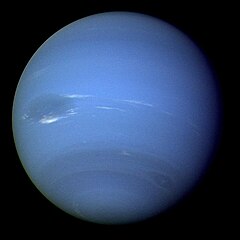
5.) The largest storm, known as the Great Dark Spot, appeared in the planet’s southern hemisphere and was photographed extensively in 1989 by the Voyager 2 spacecraft.


6.) Neptune has the fastest winds in the solar system, reaching speeds of 2,000 km/h.

7.) Neptune’s core, which reaches temperatures of 5149°C, is hotter than the Sun’s surface.

8.) Proteus is the sixth moon out from Neptune. This satellite is the largest irregularly shaped moon in the solar system.

9.) Neptune is classified as one of the giant or Jovian (Jupiter-like) planets together with Jupiter, Saturn, and Uranus.

10.) Neptune and Uranus are also classified as ice giant planet because they are mainly made of the ice-forming molecules water, ammonia, and methane as a liquid mixture above what is thought to be a rocky core.

11.) The planet’s atmosphere is mainly hydrogen and helium, along with methane gas that gives the planet a blue-green color.

12.) Neptune orbits the Sun at an average distance of about 4,490 million km in a period of 165 Earth years and only receives about 1/900th the amount of sunlight that Earth does.

13.) Neptune’s diameter at the equator is about 49,520 km.

14.) Even though Neptune’s volume is 72 times Earth’s volume, its mass is only 17.15 times Earth’s mass.

15.) Neptune has four rings and one of the planets with the most satellite. It has 13 known moons.


16.) German astronomer Johann Gottfried Galle first observed the planet by telescope in 1846.

17.) Leverrier proposed that this planet be named after the sea god Neptune and the appropriateness of this name is confirmed in the 20th century when astronomers learned about the watery interior of Neptune.

18.) Neptune is barely visible to the naked eye and is so faint that even through binoculars it appears as a dim star.

19.) Through a large telescope, the planet appears from Earth as a small greenish disk with a diameter of about 2.3 arc seconds.

20.) Neptune is about 4.49 billion km away from Earth. So far that only one spacecraft has visited the planet.

21.) During a rare alignment of the four giant planets, the spacecraft Voyager 2, launched on August 20, 1977, was able to pass by Jupiter (in 1979), Saturn (in 1981), Uranus (in 1986), and Neptune (in 1989).

22.) Voyager 2 successively passed each of the four giant planets and reached Neptune more than ten years after its launch.

23.) As Voyager 2 passed by Neptune, it recorded and transmitted images of the planet, its rings, and its moons.

24.) Neptune orbits about 4,490 million km Neptune takes 164.79 years to complete a single revolution around the Sun, so a year on Neptune is 164.79 times longer than a year on Earth.

25.) The orbital plane of Neptune lies close to Earth’s orbital plane. As a result, Neptune always crosses the same region of Earth’s sky.


As compared to Earth

26.) The planet spins around its axis once every 16 hours in a counterclockwise direction, just as Earth spins once every 24 hours.

27.) The axis of rotation on Neptune tilts 29.6° into its orbital plane. This tilt gives Neptune almost Earth-like seasons.

28.) Neptune contains mostly rock and water, with hydrogen and helium and trace amounts of methane in its dense atmosphere.

29.) Astronomers believe that Neptune formed from frozen water and rock supplied by icy comet-like material found in the outer regions of the solar system.

30.) Although Neptune is one of the giant planets, it is smaller and has a different chemical composition than those of Saturn and Jupiter.

31.) Neptune is made mostly of water. Because water is denser than hydrogen or helium, Neptune is more compact than either Jupiter or Saturn.

32.) Neptune has a radius of about 24,760 km and is also more massive and compact than Uranus, which has a radius of 25,560 km.

33.) Neptune’s ocean is extremely hot reaching temperature of about 4700° C. The ocean remains liquid at this temperature instead of evaporating because the pressure deep in Neptune is several million times higher than the atmospheric pressure on Earth.

34.) The gaseous atmosphere of Neptune contains hydrogen, helium, and about 3 percent methane.

35.) Light reflected from Neptune’s deep atmosphere is blue, because the atmospheric methane absorbs red and orange light but scatters blue light.


36.) Neptune emits about 2.7 times the amount of heat it absorbs from the Sun.

37.) Neptune has an active atmosphere, with winds and massive storms that may be caused by heat escaping the planet’s interior.

38.) Neptune’s winds, which blow in a latitude direction, are faster in the planet’s polar regions than they are at Neptune’s equator.

39.) Storms thousands of kilometers across in Neptune’s atmosphere had been observed.

40.) Scientists estimated that the Great Dark Spot was as large in diameter as Earth is.

41.) Neptune, like Earth, is surrounded by a magnetic field and the influence of Neptune’s magnetic field extends for several hundred thousand kilometers above the planet.

42.) These rings of Neptune range in width from 15 km to 5,800 km. All of these rings completely encircle the planet.

43.) The outermost ring includes three or more arcs of concentrated debris some of which had been detected from Earth before the Voyager 2 encounter.

44.) Only two of the 13 moons—Triton and Nereid—were directly observed from Earth prior to the 1990s.

45.) Triton was discovered in 1846 by British astronomer William Lassell


46.) Nereid was discovered in 1949 by Dutch-born American astronomer Gerard Kuiper.

47.) Scientists discovered another moon, Larissa, in 1981 when the moon occulted a star.

48.) Five more moons of Neptune were discovered from images transmitted to Earth by the Voyager 2 spacecraft.

49.) Large Earth-based telescopes led to the discovery of 3 more moons in 2003 and 2 more in 2004, bringing the total to 13.

50.) From the closest to Neptune outward, these moons are Naiad, Thalassa, Despina, and Galatea.

51.) Larissa is the fifth moon in distance from Neptune. It is heavily cratered and irregular in shape.

52.) Proteus is the sixth moon out from Neptune. This satellite is the largest irregularly shaped moon in the solar system with a diameter of 436 km through its widest diameter and 402 km through its narrowest diameter.

53.) Triton is the seventh moon from Neptune and is the largest of the planet’s moons, measuring 2,700 km in diameter, larger than the dwarf planet Pluto.

54.) Triton is consists of about one-quarter ice and three-quarters rock and has few craters on its surface.

55.) Triton has undergone recent geological changes and has a thin nitrogen atmosphere and a polar cap.


56.) Voyager 2 recorded geyser-like plumes erupting from the icy crust of triton
.
57.) Triton is peculiar among the largest moon in the solar system; it has a retrograde (clockwise) orbit, meaning that it revolves around Neptune in the opposite direction that the planet rotates (counterclockwise).

58.)  Its circular orbit is also tilted out of the plane of Neptune's equator by 157°. Triton’s odd orbit is a puzzle.

59.) Nereid is the eighth moon from Neptune and has an extremely elliptical orbit, varying in distance around Neptune from 1.4 million km.

60.) Neptune’s moons are Naiad, Thalassa, Despina, Galatea, Larissa, Proteus, Triton, Nereid and 5 unnamed moons.

See also

60 Interesting And Scientific Facts About Neptune

Neptune is one of the largest planets in the Solar System. Here’s a list of the most interesting and scientific facts about planet Neptune.

1.) Planet Neptune is named after the Roman god of the sea – Neptune, the equivalent of Greek’s Poseidon.

2.) Neptune is the 8th planet in distance from the Sun.

3.) It is the 4th largest planet in diameter and the 3rd largest in mass in the solar system.

4.) Neptune was the second major planet, after Uranus, to be detected using a telescope.

5.) The largest storm, known as the Great Dark Spot, appeared in the planet’s southern hemisphere and was photographed extensively in 1989 by the Voyager 2 spacecraft.


6.) Neptune has the fastest winds in the solar system, reaching speeds of 2,000 km/h.

7.) Neptune’s core, which reaches temperatures of 5149°C, is hotter than the Sun’s surface.

8.) Proteus is the sixth moon out from Neptune. This satellite is the largest irregularly shaped moon in the solar system.

9.) Neptune is classified as one of the giant or Jovian (Jupiter-like) planets together with Jupiter, Saturn, and Uranus.

10.) Neptune and Uranus are also classified as ice giant planet because they are mainly made of the ice-forming molecules water, ammonia, and methane as a liquid mixture above what is thought to be a rocky core.

11.) The planet’s atmosphere is mainly hydrogen and helium, along with methane gas that gives the planet a blue-green color.

12.) Neptune orbits the Sun at an average distance of about 4,490 million km in a period of 165 Earth years and only receives about 1/900th the amount of sunlight that Earth does.

13.) Neptune’s diameter at the equator is about 49,520 km.

14.) Even though Neptune’s volume is 72 times Earth’s volume, its mass is only 17.15 times Earth’s mass.

15.) Neptune has four rings and one of the planets with the most satellite. It has 13 known moons.


16.) German astronomer Johann Gottfried Galle first observed the planet by telescope in 1846.

17.) Leverrier proposed that this planet be named after the sea god Neptune and the appropriateness of this name is confirmed in the 20th century when astronomers learned about the watery interior of Neptune.

18.) Neptune is barely visible to the naked eye and is so faint that even through binoculars it appears as a dim star.

19.) Through a large telescope, the planet appears from Earth as a small greenish disk with a diameter of about 2.3 arc seconds.

20.) Neptune is about 4.49 billion km away from Earth. So far that only one spacecraft has visited the planet.

21.) During a rare alignment of the four giant planets, the spacecraft Voyager 2, launched on August 20, 1977, was able to pass by Jupiter (in 1979), Saturn (in 1981), Uranus (in 1986), and Neptune (in 1989).

22.) Voyager 2 successively passed each of the four giant planets and reached Neptune more than ten years after its launch.

23.) As Voyager 2 passed by Neptune, it recorded and transmitted images of the planet, its rings, and its moons.

24.) Neptune orbits about 4,490 million km Neptune takes 164.79 years to complete a single revolution around the Sun, so a year on Neptune is 164.79 times longer than a year on Earth.

25.) The orbital plane of Neptune lies close to Earth’s orbital plane. As a result, Neptune always crosses the same region of Earth’s sky.


As compared to Earth

26.) The planet spins around its axis once every 16 hours in a counterclockwise direction, just as Earth spins once every 24 hours.

27.) The axis of rotation on Neptune tilts 29.6° into its orbital plane. This tilt gives Neptune almost Earth-like seasons.

28.) Neptune contains mostly rock and water, with hydrogen and helium and trace amounts of methane in its dense atmosphere.

29.) Astronomers believe that Neptune formed from frozen water and rock supplied by icy comet-like material found in the outer regions of the solar system.

30.) Although Neptune is one of the giant planets, it is smaller and has a different chemical composition than those of Saturn and Jupiter.

31.) Neptune is made mostly of water. Because water is denser than hydrogen or helium, Neptune is more compact than either Jupiter or Saturn.

32.) Neptune has a radius of about 24,760 km and is also more massive and compact than Uranus, which has a radius of 25,560 km.

33.) Neptune’s ocean is extremely hot reaching temperature of about 4700° C. The ocean remains liquid at this temperature instead of evaporating because the pressure deep in Neptune is several million times higher than the atmospheric pressure on Earth.

34.) The gaseous atmosphere of Neptune contains hydrogen, helium, and about 3 percent methane.

35.) Light reflected from Neptune’s deep atmosphere is blue, because the atmospheric methane absorbs red and orange light but scatters blue light.


36.) Neptune emits about 2.7 times the amount of heat it absorbs from the Sun.

37.) Neptune has an active atmosphere, with winds and massive storms that may be caused by heat escaping the planet’s interior.

38.) Neptune’s winds, which blow in a latitude direction, are faster in the planet’s polar regions than they are at Neptune’s equator.

39.) Storms thousands of kilometers across in Neptune’s atmosphere had been observed.

40.) Scientists estimated that the Great Dark Spot was as large in diameter as Earth is.

41.) Neptune, like Earth, is surrounded by a magnetic field and the influence of Neptune’s magnetic field extends for several hundred thousand kilometers above the planet.

42.) These rings of Neptune range in width from 15 km to 5,800 km. All of these rings completely encircle the planet.

43.) The outermost ring includes three or more arcs of concentrated debris some of which had been detected from Earth before the Voyager 2 encounter.

44.) Only two of the 13 moons—Triton and Nereid—were directly observed from Earth prior to the 1990s.

45.) Triton was discovered in 1846 by British astronomer William Lassell


46.) Nereid was discovered in 1949 by Dutch-born American astronomer Gerard Kuiper.

47.) Scientists discovered another moon, Larissa, in 1981 when the moon occulted a star.

48.) Five more moons of Neptune were discovered from images transmitted to Earth by the Voyager 2 spacecraft.

49.) Large Earth-based telescopes led to the discovery of 3 more moons in 2003 and 2 more in 2004, bringing the total to 13.

50.) From the closest to Neptune outward, these moons are Naiad, Thalassa, Despina, and Galatea.

51.) Larissa is the fifth moon in distance from Neptune. It is heavily cratered and irregular in shape.

52.) Proteus is the sixth moon out from Neptune. This satellite is the largest irregularly shaped moon in the solar system with a diameter of 436 km through its widest diameter and 402 km through its narrowest diameter.

53.) Triton is the seventh moon from Neptune and is the largest of the planet’s moons, measuring 2,700 km in diameter, larger than the dwarf planet Pluto.

54.) Triton is consists of about one-quarter ice and three-quarters rock and has few craters on its surface.

55.) Triton has undergone recent geological changes and has a thin nitrogen atmosphere and a polar cap.


56.) Voyager 2 recorded geyser-like plumes erupting from the icy crust of triton
.
57.) Triton is peculiar among the largest moon in the solar system; it has a retrograde (clockwise) orbit, meaning that it revolves around Neptune in the opposite direction that the planet rotates (counterclockwise).

58.)  Its circular orbit is also tilted out of the plane of Neptune's equator by 157°. Triton’s odd orbit is a puzzle.

59.) Nereid is the eighth moon from Neptune and has an extremely elliptical orbit, varying in distance around Neptune from 1.4 million km.

60.) Neptune’s moons are Naiad, Thalassa, Despina, Galatea, Larissa, Proteus, Triton, Nereid and 5 unnamed moons.

See also

Monday, September 19, 2011

40 Amazing and Interesting Scientific Facts About the Planet Mercury

Mercury is the closest planet to the sun in the solar system. Here are some scientific and interesting facts about this planet.

1.) Mercury was named for the fleet-footed messenger of the gods in Roman mythology – the equivalent of the Greek’s Hermes.


2.) Mercury is the first planet in distance from the Sun in the solar system. It is the smallest of the 8 planets.

3.) This planet is the smallest of the rocky or terrestrial planets. The others are Venus, Earth, and Mars.

4.) Mercury is the only rocky planet other than Earth to have a global magnetic field, which is about 1% as strong as Earth’s.

5.) Like Venus, Mercury has no moons of its own.


6.) Although it is the nearest planet to the Sun, it is only the second hottest planet. Venus is the hottest.

7.) Mercury circles the Sun every 88 Earth days at an average distance of 58 million km and takes 59 days to turns on its axis.

8.) Mercury’s diameter is 4,879 km, about 40% the diameter of Earth or about 40% wider than the Moon.

9.) Mercury’s volume and mass are about one-eighteenth that of Earth.

10.) Mercury’s mean density, 5.4 g/cm³, is nearly as great as that of Earth and is higher than that of any of the other planets.

11.) The force of gravity on the planet’s surface is about 1/3 of that on Earth’s surface or about twice the surface gravity on the Moon and about the same as the surface gravity on Mars.

12.) Jupiter’s moon Ganymede and Saturn’s moon Titan are larger than Mercury but are much less dense.

13.) Mercury orbits the Sun every 87.97 Earth days at an average distance of approximately 58 million km.

14.) Mercury’s orbit is highly elliptical and ranges from 46 million km at its nearest point to the Sun (perihelion) to 69.8 million km at its farthest point (aphelion).

15.) As a result, sunlight is over 2.3 times stronger at perihelion than at aphelion.


16.) At a single orbit, Mercury receives as much as 11 times the intensity of sunlight that Earth does to a minimum of about 4.5 times.

17.) Mercury’s orbital velocity is also about 46 percent faster at perihelion than at aphelion. The planet’s orbit is tilted 7 degrees to the plane in which Earth orbits around the Sun.

18.) When viewed from North Pole. Mercury turns counterclockwise (west to east) like Earth and most other planets.

19.) Earth’s axis is tilted 23.5° while Mercury’s axis is almost perfectly vertical. Because its axis is vertical, like Venus, Mercury does not have seasons.

20.) Mercury rotates only once every 58.65 days, 2/3 of its period of revolution around the Sun.

21.) A complete solar day on Mercury lasts 175.84 Earth days, or two of Mercury’s years, and a night and a day at the equator each last one Mercurian year or 87.97 Earth days.

22.) Mercury preserves a record of a violent early period when asteroids, comets, and other debris bombarded the newly formed planets.

23.) The craters on Mercury are shallower than those on the Moon.

24.) The largest geological feature on Mercury is the Caloris Basin. It is the result of a massive ancient impact.

25.) Mercury’s surface is crisscrossed by long escarpments or cliffs.


26.) Mercury is a poor reflector of sunlight because its surface consists of dark, dry soil called regolith created by micrometeorite impacts over billions of years.

27.) The planet’s albedo, or the amount of sunlight it reflects, is only about 12 percent, about the same as our Moon.

28.)  Surface temperatures on Mercury can be as hot as 650°C.

29.) Mercury’s side facing the Sun gets very hot—up to 450°C—while the side facing away quickly cools to frigid temperatures, -183°.

30.) The floors of craters at the north and south poles receive very little sunlight and always remain extremely cold—about -200°C.

 31.) Mercury’s equatorial region experiences extreme changes, reaching 450°C at perihelion when facing the Sun—hot enough to melt zinc.

32.) In 1991 powerful radio telescopes on Earth revealed signs of possible deposits of ice in the polar regions of Mercury.

33.) These ice deposits occur in areas where sunlight never falls, such as crater bottoms near both of the planet’s poles.

 34.) The ice on Mercury likely comes from comets or water-bearing meteorites that have hit Mercury over the planet’s history up through the present.

35.) Scientists use a technique called spectroscopy to conduct studies of the light that Mercury reflects.


36.) These studies indicate that planet has only an extremely thin atmosphere, containing sodium and potassium.

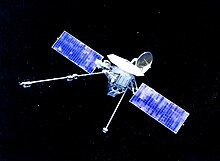
37.) The first up-close study of Mercury came with National Aeronautics and Space Administration (NASA)’s Mariner 10 spacecraft, which passed Mercury twice in 1974 and once in 1975.

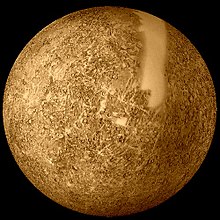
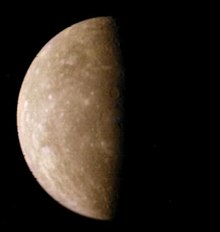
38.) It sent back pictures of a moonlike, crater-pocked surface. The spacecraft also detected a magnetic field and provided data about the planet’s density and some of its surface chemistry.

39.) In 2004, NASA launched a much more ambitious mission to Mercury – the so-called MESSENGER- MErcury Surface, Space ENvironment, GEochemistry, and Ranging.

40.) MESSENGER is set to enter orbit around Mercury in 2011. The first orbital image of Mercury was obtained on March 29, 2011.

See also