Showing posts with label great inventors. Show all posts

Saturday, October 22, 2011

Interesting Facts About Leonardo Da Vinci: Creator of Mona Lisa and The Last Supper

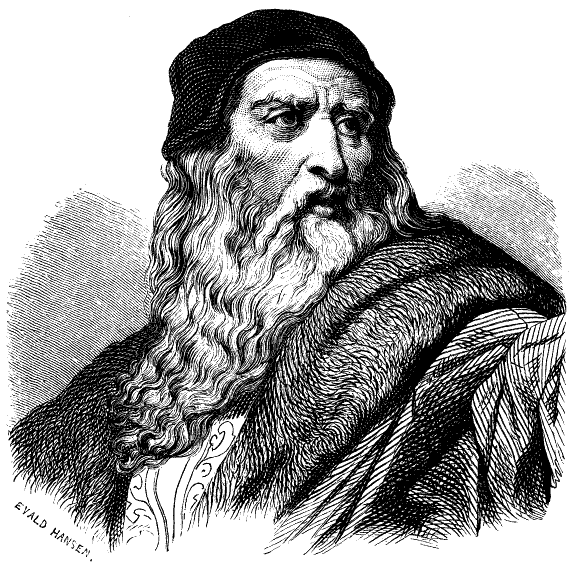
Leonardo Da Vinci is one of the most famous men in history. He is well remembered for his Mona Lisa and The Last Supper – considered as the world’s greatest painting.

1.) Leonardo di ser Piero da Vinci was born on April 15, 1452 in Florence, Italy. He was never married and had no children.

2.) Da Vinci was left-handed. He is regarded as the most universally recognized left-handed artist of all time. Amazingly, he wrote in mirror image because of his left handedness.

3.) He was a person of exceptional talent and skills. He was a polymath, sculptor, painter, musician, architect, mathematician, scientist, inventor, engineer, geologist, anatomist, writer, cartographer and botanist.

4.) He is regarded as a “Renaissance Man”, a man of "unquenchable curiosity" and "feverishly inventive imagination".

5.) He is widely considered to be one of the greatest painters of all time and perhaps the most diversely talented person ever to have lived.


6.) Leonardo appears to have had no close relationships with women except for his friendship with the two Este sisters, Beatrice and Isabella.

7.) Beyond friendship, Leonardo kept his private life secret.

8.) Da Vinci’s sexuality has been the subject of satire, analysis, and speculation.

9.) Leonardo's most intimate relationships were perhaps with his pupils Salai and Melzi.

10.) Melzi, writing to inform Leonardo's brothers of his death, described Leonardo's feelings for his pupils as both loving and passionate.

11.) Gian Giacomo Caprotti da Oreno, nicknamed Salai or Il Salaino ("The Little Unclean One" i.e., the devil), entered Leonardo's household in 1490.

12.) After only a year, Leonardo made a list of his misdemeanors, calling him "a thief, a liar, stubborn, and a glutton", after he had made off with money and valuables on at least five occasions, and spent a fortune on clothes.

13.) Nevertheless, Leonardo treated him with great indulgence and he remained in Leonardo's household for the next thirty years.

14.) Salai executed a number of paintings under the name of Andrea Salai, but although Vasari claims that Leonardo "taught him a great deal about painting".

15.) In 1515, Salai painted a nude version of the Mona Lisa, known as Monna Vanna.


16.) Salai owned the Mona Lisa at the time of his death in 1525, and in his will it was assessed at 505 lire the equivalent of £200,000, an exceptionally high valuation for a small panel portrait.

17.) In 1506, Leonardo took on another pupil, Count Francesco Melzi, the son of a Lombard aristocrat, who is considered to have been his favorite student.

18.) Melzi traveled to France with Leonardo, and remained with him until the latter's death.

19.) Upon Leonardo's death, Melzi inherited the artistic and scientific works, manuscripts, and collections of Leonardo, and faithfully administered the estate. His brothers received piece of lands. Salai received half of Leonardo’s vineyards.

20.) Based on Florentine court records of 1476, Leonardo and three other young men were charged with sodomy with a male prostitute but were acquitted.

21.) Leonardo da Vinci was born out of wedlock to a Piero da Vinci, a legal notary and Caterina, a peasant woman.

22.) Da Vinci’s “Mona Lisa” is the most famous and most parodied portrait in the world.

23.) His “The Last Supper” is the most reproduced religious painting of all time.

24.) At the age of twenty, Leonardo qualified as a master in the Guild of St. Luke, the guild of artists and doctors of medicine.

25.) He died on May 2, 1519 at the age of 67. Da Vinci was buried in the Chapel of Saint-Hubert in Château d'Amboise.


26.) Da Vinci’s Codex Leicester was bought in an auction for $30.8 million by Bill Gates in 1994. Presently, Codex Leicester is the most expensive book ever sold.

27.) Codex Arundel and Codex Atlanticus are other well known compilations of Da Vinci.

28.) Vitruvian Man is Leonardo Da Vinci’s most famous drawing. It is a study of the proportions of the human body, linking art and science.

29.) Leonardo Da Vinci was a vegetarian and wore brightly-colored clothes.

30.) He is tall, athletic and extremely handsome man.

31.) Leonardo drew the plans for the first armored car and also designed the cannon, a machine gun, gliders, turnspit for roasting meat and canal system to irrigate fields.

32.) Da Vinci was as much an inventor as an artist. Many of the inventions he designed are in use today such as the helicopters and parachutes.

33.) Leonardo Da Vinci was dyslexic.

34.) Leonardo was 23 when Michelangelo was born and 31 when Raphael was born.

35.) Raphael only lived until the age of 37 and died in 1520, the year after Leonardo, but Michelangelo went on creating for another 45 years.
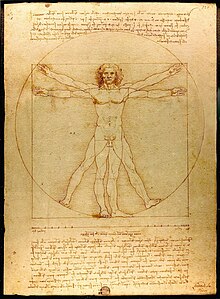
Vitruvian Man

See also

Interesting Facts About Leonardo Da Vinci: Creator of Mona Lisa and The Last Supper

Leonardo Da Vinci is one of the most famous men in history. He is well remembered for his Mona Lisa and The Last Supper – considered as the world’s greatest painting.

1.) Leonardo di ser Piero da Vinci was born on April 15, 1452 in Florence, Italy. He was never married and had no children.

2.) Da Vinci was left-handed. He is regarded as the most universally recognized left-handed artist of all time. Amazingly, he wrote in mirror image because of his left handedness.

3.) He was a person of exceptional talent and skills. He was a polymath, sculptor, painter, musician, architect, mathematician, scientist, inventor, engineer, geologist, anatomist, writer, cartographer and botanist.

4.) He is regarded as a “Renaissance Man”, a man of "unquenchable curiosity" and "feverishly inventive imagination".

5.) He is widely considered to be one of the greatest painters of all time and perhaps the most diversely talented person ever to have lived.


6.) Leonardo appears to have had no close relationships with women except for his friendship with the two Este sisters, Beatrice and Isabella.

7.) Beyond friendship, Leonardo kept his private life secret.

8.) Da Vinci’s sexuality has been the subject of satire, analysis, and speculation.

9.) Leonardo's most intimate relationships were perhaps with his pupils Salai and Melzi.

10.) Melzi, writing to inform Leonardo's brothers of his death, described Leonardo's feelings for his pupils as both loving and passionate.

11.) Gian Giacomo Caprotti da Oreno, nicknamed Salai or Il Salaino ("The Little Unclean One" i.e., the devil), entered Leonardo's household in 1490.

12.) After only a year, Leonardo made a list of his misdemeanors, calling him "a thief, a liar, stubborn, and a glutton", after he had made off with money and valuables on at least five occasions, and spent a fortune on clothes.

13.) Nevertheless, Leonardo treated him with great indulgence and he remained in Leonardo's household for the next thirty years.

14.) Salai executed a number of paintings under the name of Andrea Salai, but although Vasari claims that Leonardo "taught him a great deal about painting".

15.) In 1515, Salai painted a nude version of the Mona Lisa, known as Monna Vanna.


16.) Salai owned the Mona Lisa at the time of his death in 1525, and in his will it was assessed at 505 lire the equivalent of £200,000, an exceptionally high valuation for a small panel portrait.

17.) In 1506, Leonardo took on another pupil, Count Francesco Melzi, the son of a Lombard aristocrat, who is considered to have been his favorite student.

18.) Melzi traveled to France with Leonardo, and remained with him until the latter's death.

19.) Upon Leonardo's death, Melzi inherited the artistic and scientific works, manuscripts, and collections of Leonardo, and faithfully administered the estate. His brothers received piece of lands. Salai received half of Leonardo’s vineyards.

20.) Based on Florentine court records of 1476, Leonardo and three other young men were charged with sodomy with a male prostitute but were acquitted.

21.) Leonardo da Vinci was born out of wedlock to a Piero da Vinci, a legal notary and Caterina, a peasant woman.

22.) Da Vinci’s “Mona Lisa” is the most famous and most parodied portrait in the world.

23.) His “The Last Supper” is the most reproduced religious painting of all time.

24.) At the age of twenty, Leonardo qualified as a master in the Guild of St. Luke, the guild of artists and doctors of medicine.

25.) He died on May 2, 1519 at the age of 67. Da Vinci was buried in the Chapel of Saint-Hubert in Château d'Amboise.


26.) Da Vinci’s Codex Leicester was bought in an auction for $30.8 million by Bill Gates in 1994. Presently, Codex Leicester is the most expensive book ever sold.

27.) Codex Arundel and Codex Atlanticus are other well known compilations of Da Vinci.

28.) Vitruvian Man is Leonardo Da Vinci’s most famous drawing. It is a study of the proportions of the human body, linking art and science.

29.) Leonardo Da Vinci was a vegetarian and wore brightly-colored clothes.

30.) He is tall, athletic and extremely handsome man.

31.) Leonardo drew the plans for the first armored car and also designed the cannon, a machine gun, gliders, turnspit for roasting meat and canal system to irrigate fields.

32.) Da Vinci was as much an inventor as an artist. Many of the inventions he designed are in use today such as the helicopters and parachutes.

33.) Leonardo Da Vinci was dyslexic.

34.) Leonardo was 23 when Michelangelo was born and 31 when Raphael was born.

35.) Raphael only lived until the age of 37 and died in 1520, the year after Leonardo, but Michelangelo went on creating for another 45 years.
Vitruvian Man

See also
Tuesday, September 20, 2011

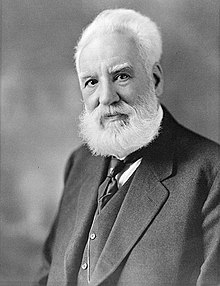
35 Interesting Facts About Alexander Graham Bell

World's Greatest Scientists/Inventors

One of the most famous inventors of all-time is Alexander Graham Bell. He is well remembered for his invention of the telephone. Here’s a list of interesting things about this very intellectual inventor.

1.) Alexander Graham Bell was born on March 3, 1847 in Edinburgh, Scotland.

2.) Alexander Graham Bell is an American inventor and teacher of the deaf.

3.) Bell is most famous for his work on the telephone.

4.) He was educated at the universities of Edinburgh and London.

5.) Bell immigrated to Canada in 1870 and to the United States in 1871.


6.) In the United States he began teaching deaf-mutes, publicizing the system called visible speech.

7.) In 1872, he founded a school to train teachers of the deaf in Boston, Massachusetts and became part of Boston University

8.) Bell was appointed professor of vocal physiology in Boston University.

9.) He became a naturalized U.S. citizen in 1882.

10.) Since the age of 18, Bell had been working on the idea of transmitting speech.


11.) In 1874, while working on a multiple telegraph, he developed the basic ideas of the telephone.

12.) On March 10, 1876, his experiments with his assistant Thomas Watson finally became a reality.

13.) The statement that Bell transmitted was “Watson, come here; I want you.”

14.) At the 1876 Centennial Exposition in Philadelphia, Pennsylvania, telephone was introduced to the world.

15.) The Bell Telephone Company was established in 1877.


16.) In 1880 France bestowed on Bell the Volta Prize, worth 50,000 francs, for his invention.

17.) He used the money in founding the Volta Laboratory in Washington, D.C. and invented the photophone with his associates.

18.) Other inventions include the audiometer, the induction balance, and the first wax recording cylinder, introduced in 1886.

19.) Bell was one of the cofounders of the National Geographic Society, and he served as its president from 1896 to 1904.

20.) He also helped to establish the journal Science by financing it from 1883-1894.


21.) Bell’s summer home is located at Baddeck on Cape Breton Island in Nova Scotia, Canada.

22.) Most of his inventions on aeronautics were first tested near his summer home in Canada.

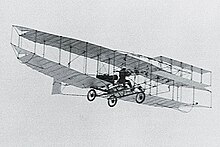
23.) His study of flight began with the construction of large kites, and in 1907 he devised a kite capable of carrying a person.

24.) Bell, with the American inventor and aviator Glenn Hammond Curtiss, developed the aileron and the tricycle landing gear.

25.) His group also started working on hydrofoil boats, which travel above the water at high speeds.


26.) Bell’s final full-sized “hydrodrome,” developed in 1917, reached speeds in excess of 113 km/h for many years were the world’s fastest boat.

27.) His book Duration of Life and Conditions Associated with Longevity was published in 1918.

28.) Alexander Graham Bell died on August 2, 1922, at Baddeck, Cape Breton Island.

29.) A museum is located in his home and contains several of his original inventions. The museum is maintained by the Canadian government.

30.) Alexander Graham Bell, who was unable to complete the university program of his youth, received numerous Honorary Degrees from academic institutions.


31.) Close relatives and friends called him Aleck.

32.) His two brothers, Melville James and Edward Charles, both died of tuberculosis.

33.) His father was a professor.

34.) His two brothers both have middle name. At age 10 he asked his father that he should have a middle name too. On his 11th birthday his wish was granted.

35.) At age 16, Bell secured a position as a "pupil-teacher" of elocution and music, in Weston House Academy located at Elgin, Moray, Scotland.

35 Interesting Facts About Alexander Graham Bell

World's Greatest Scientists/Inventors

One of the most famous inventors of all-time is Alexander Graham Bell. He is well remembered for his invention of the telephone. Here’s a list of interesting things about this very intellectual inventor.

1.) Alexander Graham Bell was born on March 3, 1847 in Edinburgh, Scotland.

2.) Alexander Graham Bell is an American inventor and teacher of the deaf.

3.) Bell is most famous for his work on the telephone.

4.) He was educated at the universities of Edinburgh and London.

5.) Bell immigrated to Canada in 1870 and to the United States in 1871.


6.) In the United States he began teaching deaf-mutes, publicizing the system called visible speech.

7.) In 1872, he founded a school to train teachers of the deaf in Boston, Massachusetts and became part of Boston University

8.) Bell was appointed professor of vocal physiology in Boston University.

9.) He became a naturalized U.S. citizen in 1882.

10.) Since the age of 18, Bell had been working on the idea of transmitting speech.


11.) In 1874, while working on a multiple telegraph, he developed the basic ideas of the telephone.

12.) On March 10, 1876, his experiments with his assistant Thomas Watson finally became a reality.

13.) The statement that Bell transmitted was “Watson, come here; I want you.”

14.) At the 1876 Centennial Exposition in Philadelphia, Pennsylvania, telephone was introduced to the world.

15.) The Bell Telephone Company was established in 1877.


16.) In 1880 France bestowed on Bell the Volta Prize, worth 50,000 francs, for his invention.

17.) He used the money in founding the Volta Laboratory in Washington, D.C. and invented the photophone with his associates.

18.) Other inventions include the audiometer, the induction balance, and the first wax recording cylinder, introduced in 1886.

19.) Bell was one of the cofounders of the National Geographic Society, and he served as its president from 1896 to 1904.

20.) He also helped to establish the journal Science by financing it from 1883-1894.


21.) Bell’s summer home is located at Baddeck on Cape Breton Island in Nova Scotia, Canada.

22.) Most of his inventions on aeronautics were first tested near his summer home in Canada.

23.) His study of flight began with the construction of large kites, and in 1907 he devised a kite capable of carrying a person.

24.) Bell, with the American inventor and aviator Glenn Hammond Curtiss, developed the aileron and the tricycle landing gear.

25.) His group also started working on hydrofoil boats, which travel above the water at high speeds.


26.) Bell’s final full-sized “hydrodrome,” developed in 1917, reached speeds in excess of 113 km/h for many years were the world’s fastest boat.

27.) His book Duration of Life and Conditions Associated with Longevity was published in 1918.

28.) Alexander Graham Bell died on August 2, 1922, at Baddeck, Cape Breton Island.

29.) A museum is located in his home and contains several of his original inventions. The museum is maintained by the Canadian government.

30.) Alexander Graham Bell, who was unable to complete the university program of his youth, received numerous Honorary Degrees from academic institutions.


31.) Close relatives and friends called him Aleck.

32.) His two brothers, Melville James and Edward Charles, both died of tuberculosis.

33.) His father was a professor.

34.) His two brothers both have middle name. At age 10 he asked his father that he should have a middle name too. On his 11th birthday his wish was granted.

35.) At age 16, Bell secured a position as a "pupil-teacher" of elocution and music, in Weston House Academy located at Elgin, Moray, Scotland.