Showing posts with label eco-region. Show all posts

Wednesday, August 17, 2011

The Most Remarkable and Captivating Tundras in the World


Definition, type of tundra and examples

Some types of tundra include Scandinavian tundra, Alpine tundra and Arctic coastal tundra.

Yes some tundras are beautiful. What is tundra? Tundra is a biome where the tree growth is hindered by low temperatures and short growing seasons. It’s a Russian term from the Kildin Sami word tūndâr which means "uplands," "treeless mountain tract."

Here are some beautiful examples of tundra.

1.) Scandinavian Tundra
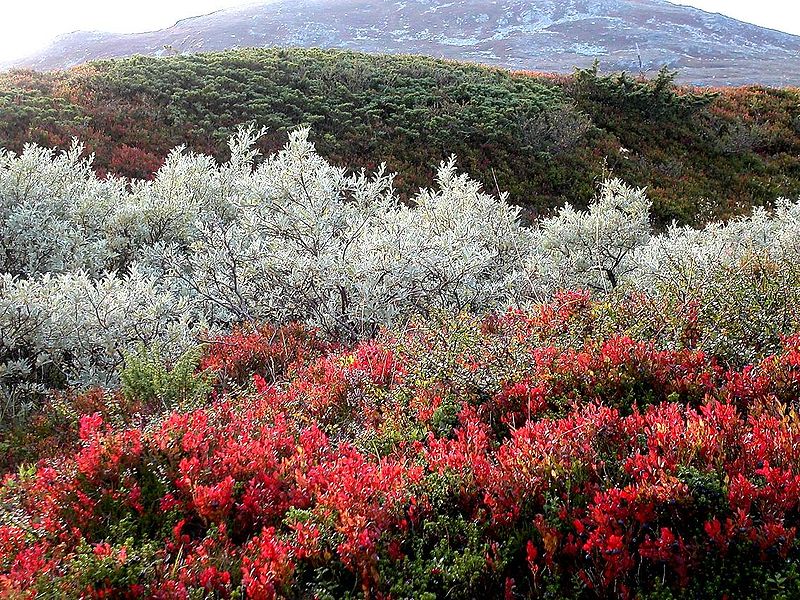

This is the Scandinavian Montane Birch forests and grasslands ecoregion, a Palearctic eco-region of the temperate broadleaf and mixed forests biome, located in the Scandinavian countries of Finland, Norway and Sweden. The Scandinavian Tundra is one of the terrestrial eco-regions determined and defined by the World Wildlife Fund.

2.) Alpine Tundra


This captivating landscape is an example of Alpine tundra. It is located in the Swiss Alps. This type of tundra that does not contain trees because it is at high altitude.

3.) Aleutian Islands


The Aleutian Islands are a chain of more than 300 small volcanic islands, forming part of the Aleutian Arc in the Northern Pacific Ocean. Nearly all the archipelago is part of Alaska and usually considered as being in the "Alaskan Bush".

4.) Arctic Coastal Tundra
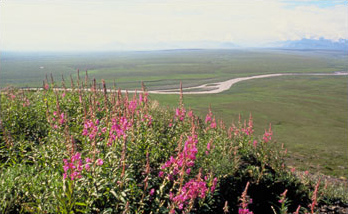

Another beautiful example of tundra is the Arctic Coastal Tundra. This eco-region is located in the far north of North America. The region is an important breeding ground for a great deal of wildlife.

5.) Greenland Tundra


Greenland Tundra is located in Sydkapp in Scoresby Sund, East Greenland. The skull on the foreground belongs to Musk Ox. The vegetation on the area is mostly Salix glauca.

6.) Alaska Tundra


The Alaska Tundra is a bizarre example of tundra. It is treeless tundra in Alaska, USA.

See also 

The Most Remarkable and Captivating Tundras in the World


Definition, type of tundra and examples

Some types of tundra include Scandinavian tundra, Alpine tundra and Arctic coastal tundra.

Yes some tundras are beautiful. What is tundra? Tundra is a biome where the tree growth is hindered by low temperatures and short growing seasons. It’s a Russian term from the Kildin Sami word tūndâr which means "uplands," "treeless mountain tract."

Here are some beautiful examples of tundra.

1.) Scandinavian Tundra


This is the Scandinavian Montane Birch forests and grasslands ecoregion, a Palearctic eco-region of the temperate broadleaf and mixed forests biome, located in the Scandinavian countries of Finland, Norway and Sweden. The Scandinavian Tundra is one of the terrestrial eco-regions determined and defined by the World Wildlife Fund.

2.) Alpine Tundra


This captivating landscape is an example of Alpine tundra. It is located in the Swiss Alps. This type of tundra that does not contain trees because it is at high altitude.

3.) Aleutian Islands


The Aleutian Islands are a chain of more than 300 small volcanic islands, forming part of the Aleutian Arc in the Northern Pacific Ocean. Nearly all the archipelago is part of Alaska and usually considered as being in the "Alaskan Bush".

4.) Arctic Coastal Tundra


Another beautiful example of tundra is the Arctic Coastal Tundra. This eco-region is located in the far north of North America. The region is an important breeding ground for a great deal of wildlife.

5.) Greenland Tundra


Greenland Tundra is located in Sydkapp in Scoresby Sund, East Greenland. The skull on the foreground belongs to Musk Ox. The vegetation on the area is mostly Salix glauca.

6.) Alaska Tundra


The Alaska Tundra is a bizarre example of tundra. It is treeless tundra in Alaska, USA.

See also 

The World’s Most Beautiful and Important Savannas


Definition, type of savannas, importance and examples

Some types of savanna include oak savanna, equatorial savanna, tropical savanna and acacia savanna.

A Savanna is a land with both grass and either scattered trees or an open canopy of trees. It is also spelled savannah. A savanna is sometimes referred to grassland. Here are some notable examples of savannas in the world.
Oak Savanna


North Slope Santa Ynez Mountains

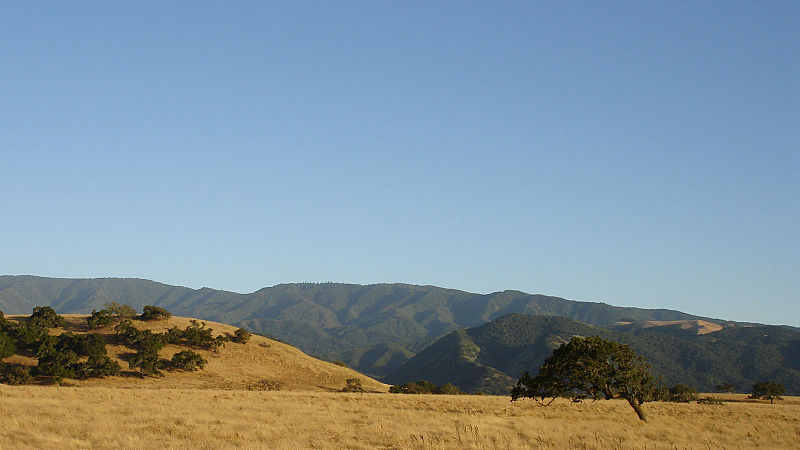
This savanna is an example of an oak savanna which is a type of savanna, or lightly forested grassland, where oaks are the dominant tree species. These savannas were maintained historically through wildfires set by lightning, grazing, low precipitation, poor soil, and/or fires set by Native Americans.


Oregon Oak Savanna

The oak savanna on the above photo is the Oregon oak savanna. The oak savannas of California were dominated by Valley oaks in the coastal regions' interior valleys and hills of the California chaparral and woodlands eco-region, and in the San Joaquin Valley and Sacramento Valley of the Central Valley eco-region and terrestrial biome.

Serengeti Plains


Serengeti Plains is one of the most remarkable savannas in the world. The popular Serengeti ecosystem is a geographical region in Africa. It is located in north Tanzania and extends to south-western Kenya. The Serengeti hosts the largest mammal migration in the world. This natural travel wonder of the world contains several national parks and game reserves. Serengeti is from the Maasai word "Serengit" which means "Endless Plains".
San Rafael Gran Sabana


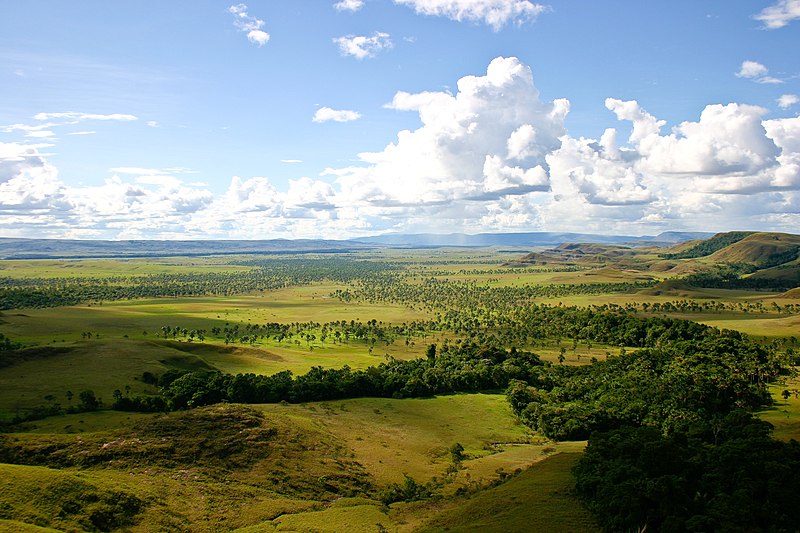
San Rafael Gran Sabana or simply Gran Sabana is an important attraction of Venezuela. Gran Sabana means “Great Savanna”. It is located in the south of Bolivar State on the Venezuelan-Brazilian border.


The Gran Sabana lies on a plateau with a mean altitude of 1,000 meters above sea level and is dotted with huge table-top mountains called tepuis, which rise dramatically from the surrounding plains.

Illinois Grassland


The above photo is a restored Illinois grassland ecosystem at Morton Arboretum. Temperate grassland like this is a terrestrial biome whose predominant vegetation consists of grasses and/or shrubs.

Equatorial Savanna


Another type of the savanna is Equatorial savanna. The above picture of an Equatorial savanna is located in the East Province of Cameroon in Africa.

Angolan Mopane Woodlands


The Angolan Mopane Woodlands are located in northern Namibia and southwestern Angola. This ecosystem surrounds Etosha Pan, which is considered a separate eco-region. The slim, elegant mopane trees are the main type of vegetation

Tropical Savanna


The Australian savannah is a typical tropical savanna located in Northern Australia. It is characterized by high tree density and regular spacing characteristic of many savannas.

Acacia Savanna


Like Oak Savannas, an Acacia Savanna is lightly forested grassland, where acacias are the dominant tree species. The Acacia Savanna on the above photo is located south of Fada N'Gourma, Burkina Faso.

See also

The World’s Most Beautiful and Important Savannas


Definition, type of savannas, importance and examples

Some types of savanna include oak savanna, equatorial savanna, tropical savanna and acacia savanna.

A Savanna is a land with both grass and either scattered trees or an open canopy of trees. It is also spelled savannah. A savanna is sometimes referred to grassland. Here are some notable examples of savannas in the world.

Oak Savanna


North Slope Santa Ynez Mountains

This savanna is an example of an oak savanna which is a type of savanna, or lightly forested grassland, where oaks are the dominant tree species. These savannas were maintained historically through wildfires set by lightning, grazing, low precipitation, poor soil, and/or fires set by Native Americans.


Oregon Oak Savanna

The oak savanna on the above photo is the Oregon oak savanna. The oak savannas of California were dominated by Valley oaks in the coastal regions' interior valleys and hills of the California chaparral and woodlands eco-region, and in the San Joaquin Valley and Sacramento Valley of the Central Valley eco-region and terrestrial biome.

Serengeti Plains


Serengeti Plains is one of the most remarkable savannas in the world. The popular Serengeti ecosystem is a geographical region in Africa. It is located in north Tanzania and extends to south-western Kenya. The Serengeti hosts the largest mammal migration in the world. This natural travel wonder of the world contains several national parks and game reserves. Serengeti is from the Maasai word "Serengit" which means "Endless Plains".

San Rafael Gran Sabana


San Rafael Gran Sabana or simply Gran Sabana is an important attraction of Venezuela. Gran Sabana means “Great Savanna”. It is located in the south of Bolivar State on the Venezuelan-Brazilian border.


The Gran Sabana lies on a plateau with a mean altitude of 1,000 meters above sea level and is dotted with huge table-top mountains called tepuis, which rise dramatically from the surrounding plains.

Illinois Grassland


The above photo is a restored Illinois grassland ecosystem at Morton Arboretum. Temperate grassland like this is a terrestrial biome whose predominant vegetation consists of grasses and/or shrubs.
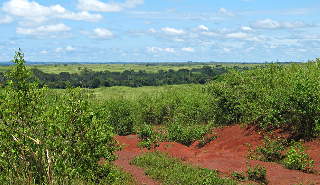
Equatorial Savanna


Another type of the savanna is Equatorial savanna. The above picture of an Equatorial savanna is located in the East Province of Cameroon in Africa.

Angolan Mopane Woodlands


The Angolan Mopane Woodlands are located in northern Namibia and southwestern Angola. This ecosystem surrounds Etosha Pan, which is considered a separate eco-region. The slim, elegant mopane trees are the main type of vegetation

Tropical Savanna


The Australian savannah is a typical tropical savanna located in Northern Australia. It is characterized by high tree density and regular spacing characteristic of many savannas.

Acacia Savanna


Like Oak Savannas, an Acacia Savanna is lightly forested grassland, where acacias are the dominant tree species. The Acacia Savanna on the above photo is located south of Fada N'Gourma, Burkina Faso.

See also